How this helps
Give the routine somewhere visible to live.
A spoken routine can disappear as soon as it is said. A visual sequence stays there, ready to be checked again without asking a parent to repeat every step.

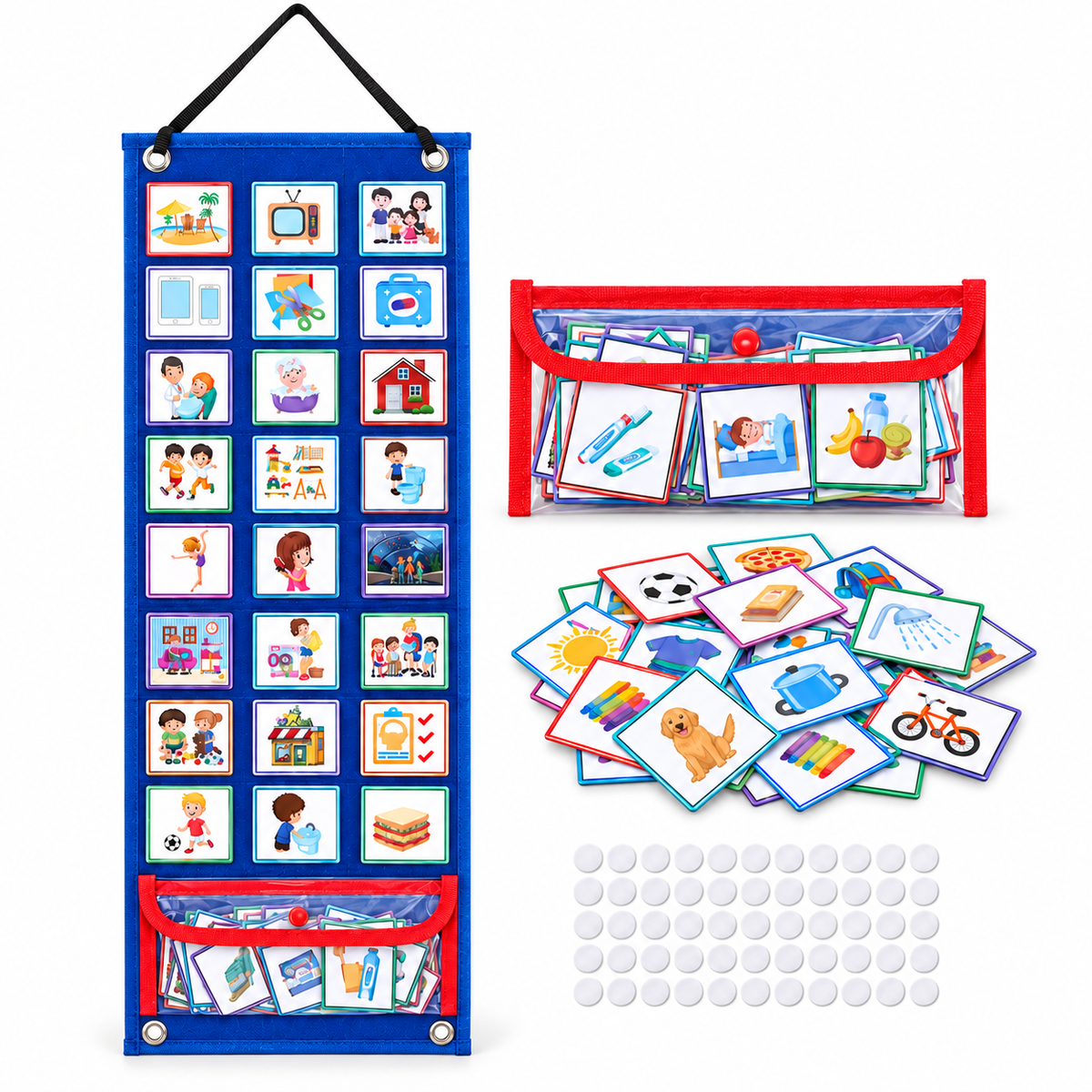
Visual routine support · 70 everyday cards
Move the routine out of repeated reminders and into something your child can see.
How this helps
A spoken routine can disappear as soon as it is said. A visual sequence stays there, ready to be checked again without asking a parent to repeat every step.
Try it like this
Start with one routine. Pick only the cards you need, arrange the sequence together where possible, then point back to the next visible step.
Good to know
70 visual cards · Reusable routines · Morning to bedtime. Add more only when it makes everyday life clearer.
Keep the board simple: use only the steps that matter, place it where the routine happens, and change it when family life changes.
When the same instruction has to be repeated again and again, the useful change is often not more words. It is giving the moment something visible to point back to.
Start with one routine, transition or task that already happens often.
Keep the visual support close to the real moment instead of turning it into a separate activity.
Use fewer words where possible and let the visible cue carry more of the reminder.
A small everyday shift
Build a short routine with only the cards that matter now. When the sequence changes, change the board too.
The board supports the conversation; it does not have to make every day identical.
A clearer choice
A practical comparison to help you decide whether this is the right fit for your family.
Buy the currently selected option securely through Shopify.